Jalal Kazempour — DTU
Nine years of research records rebuilt out of Google Sites into a site that reads like an academic document
About the client
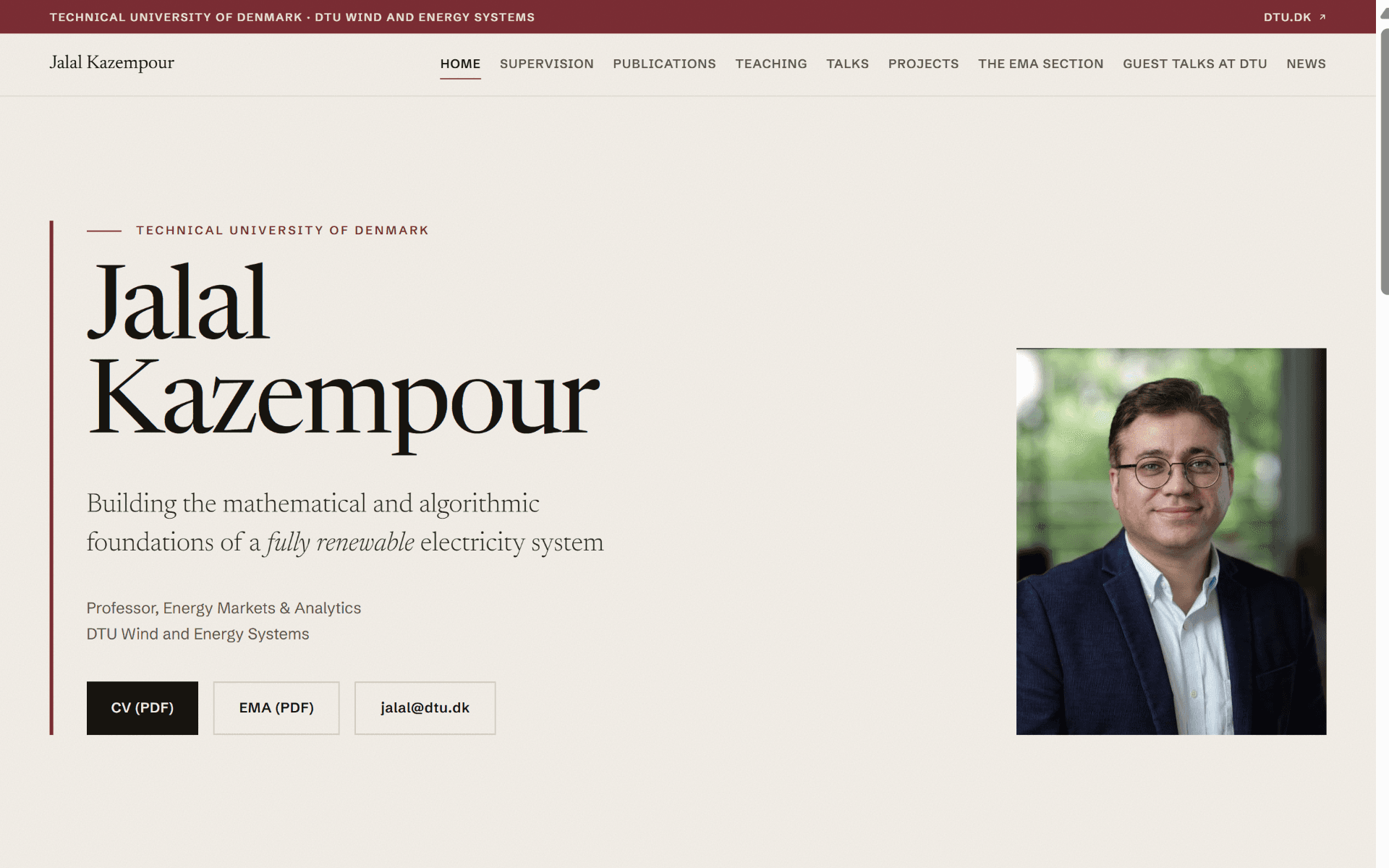
Jalal Kazempour is a Full Professor at the Technical University of Denmark, in the Department of Wind and Energy Systems, where he heads the Energy Markets and Analytics section. His site, jalalkazempour.com, is the public record of his research, his students and his teaching.
The problem
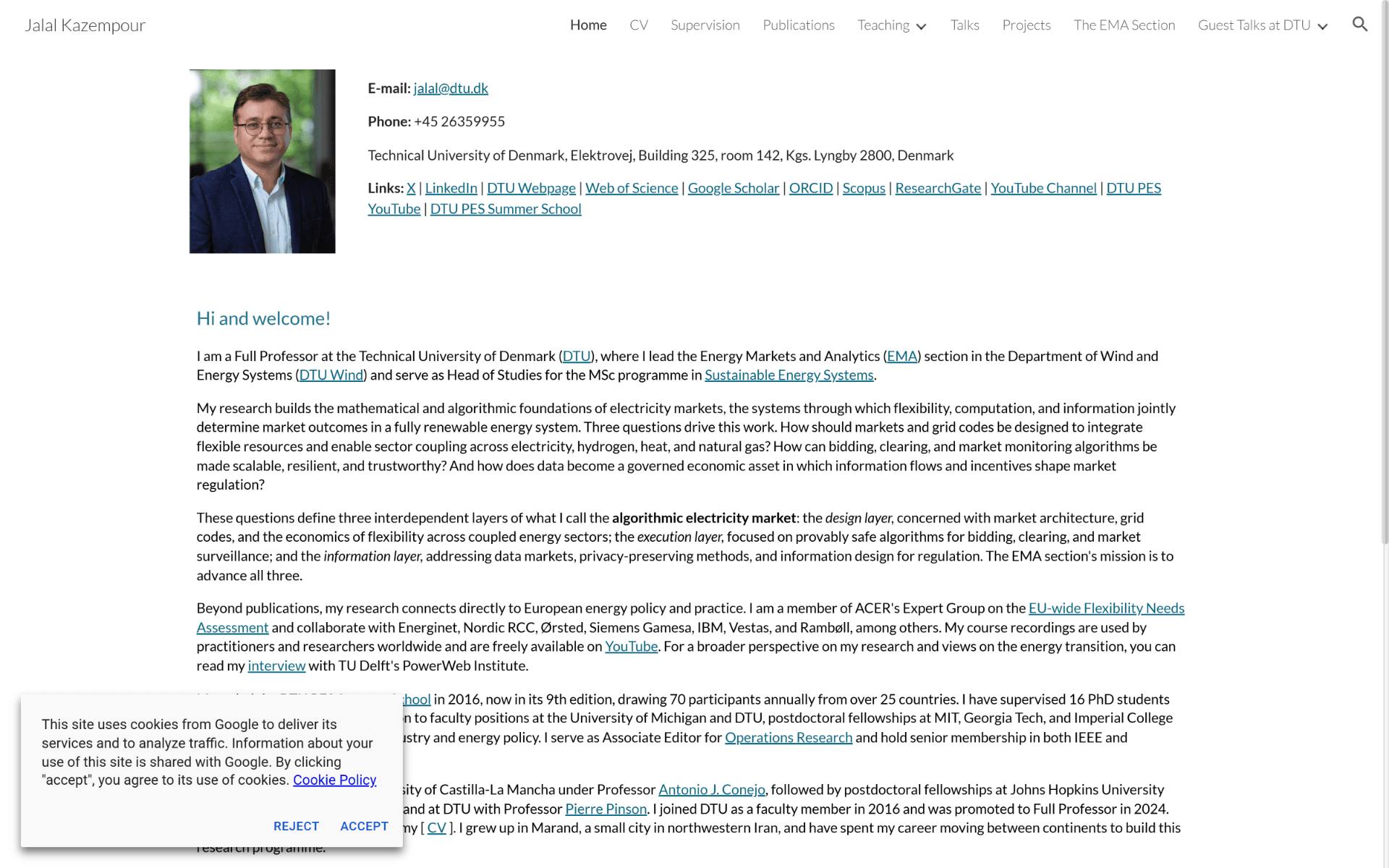
The site was a Google Sites page: nine pages, ten sub-pages, and nine years of news archives. Nothing could be maintained without opening and editing pages one at a time, the design was the same generic template thousands of other sites use, and years of research records were spread across pages that had to be kept in agreement by hand. Every new publication meant remembering which other pages also had to change.
Project scope & my role
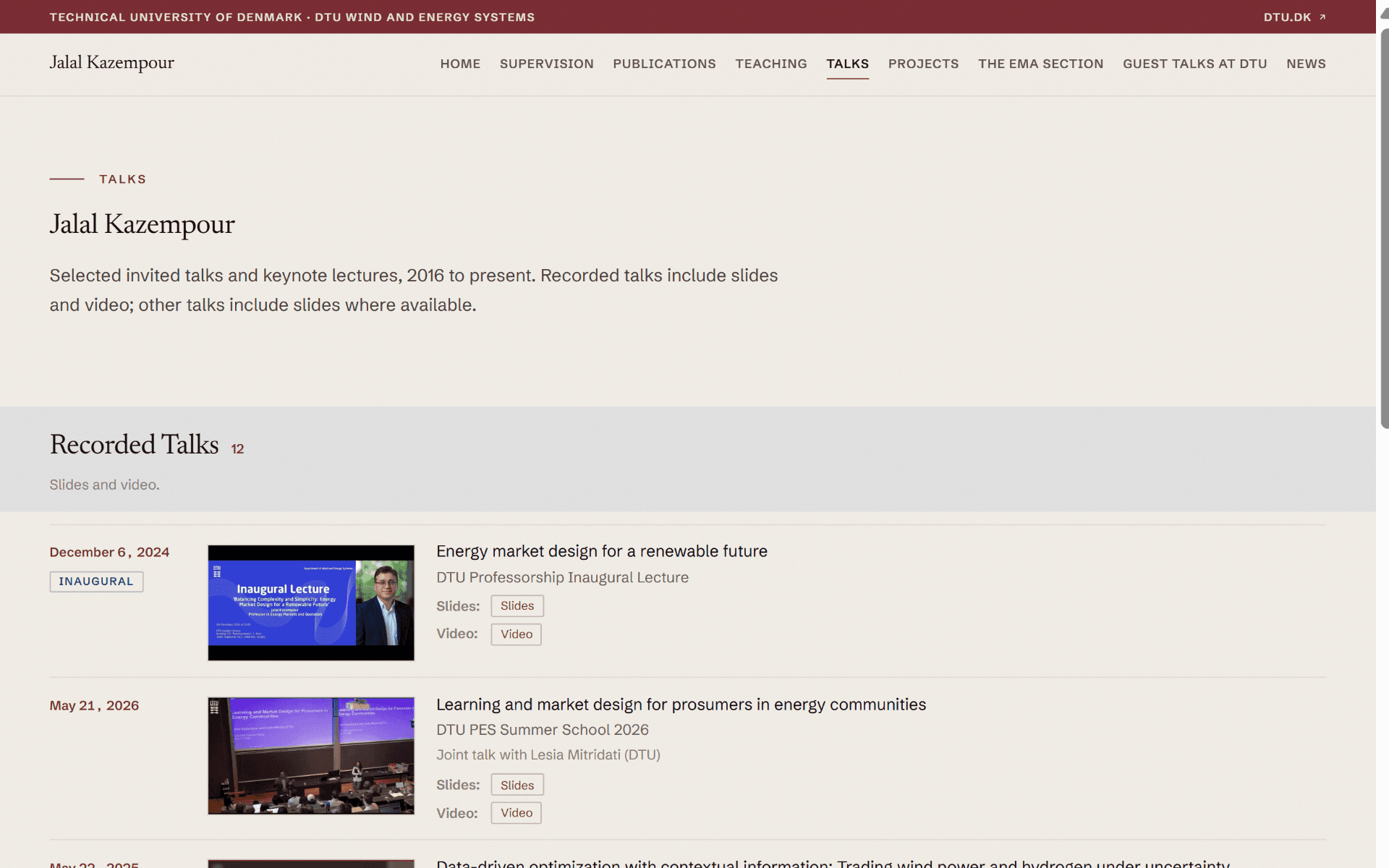
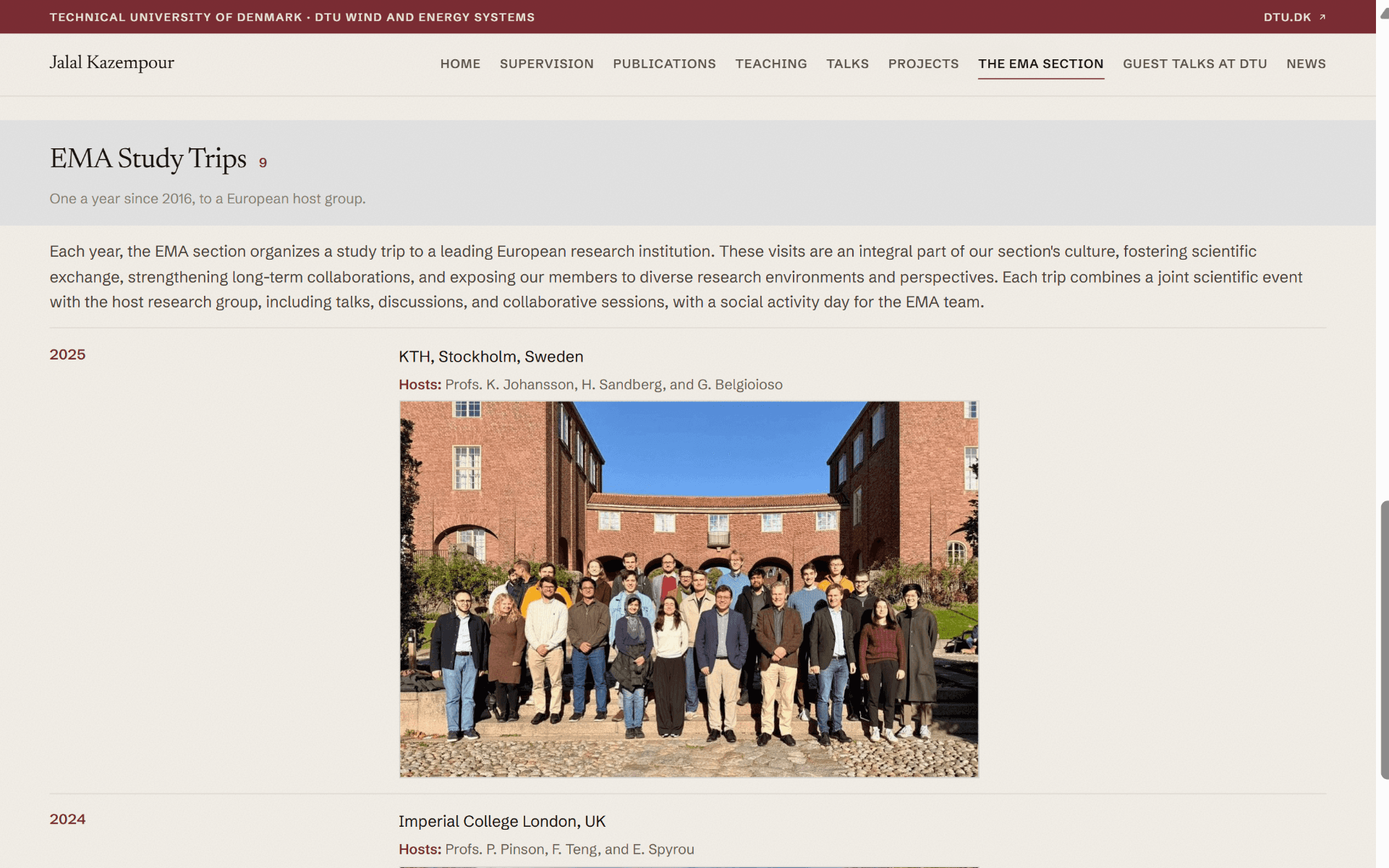
A complete rebuild. Seven pages are live so far — home, publications, supervision, teaching, talks, projects and news — with more in progress. I designed and built all of it, and wrote the scripts that moved nine years of records across from the old site.
Key features
Key challenges
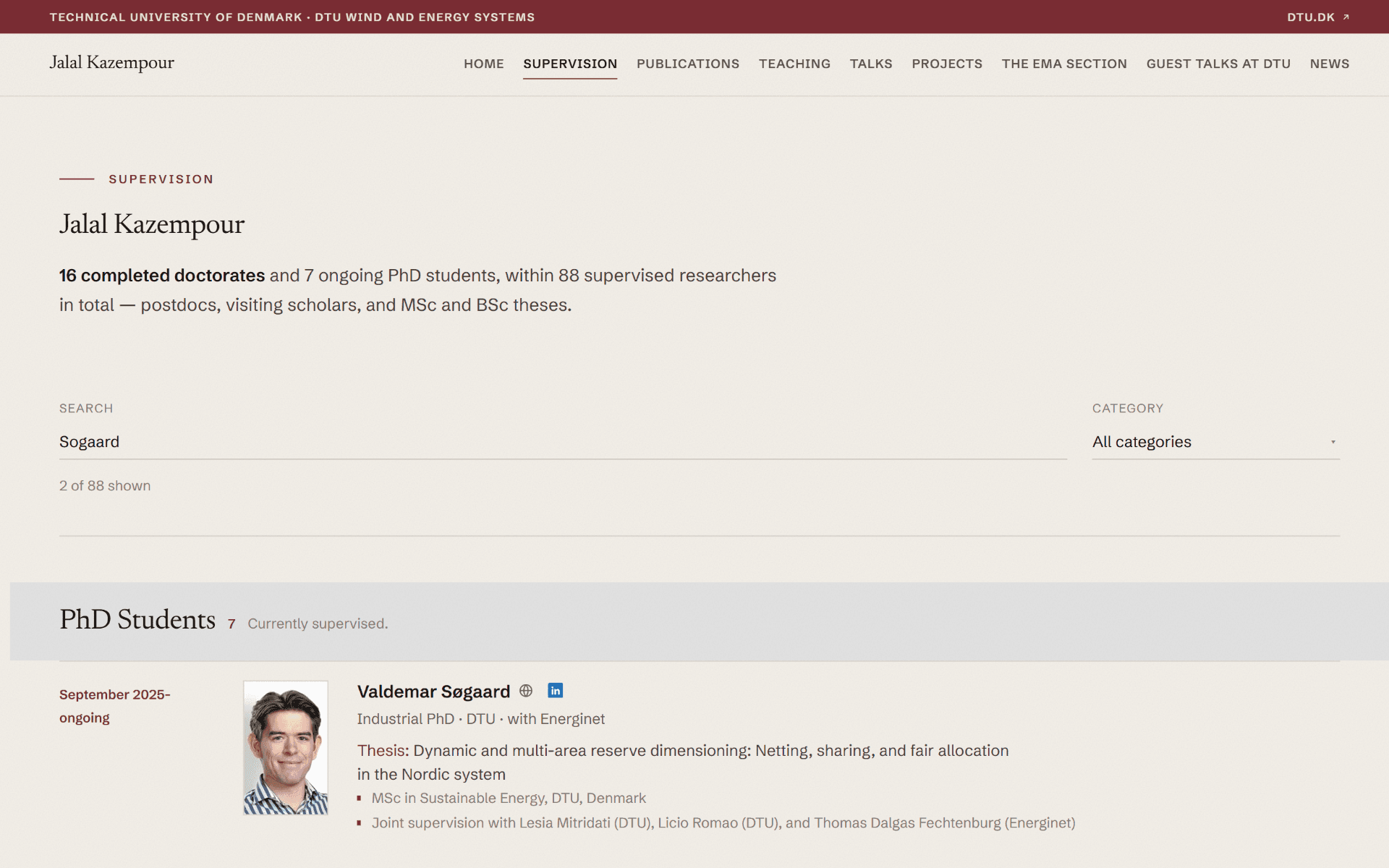
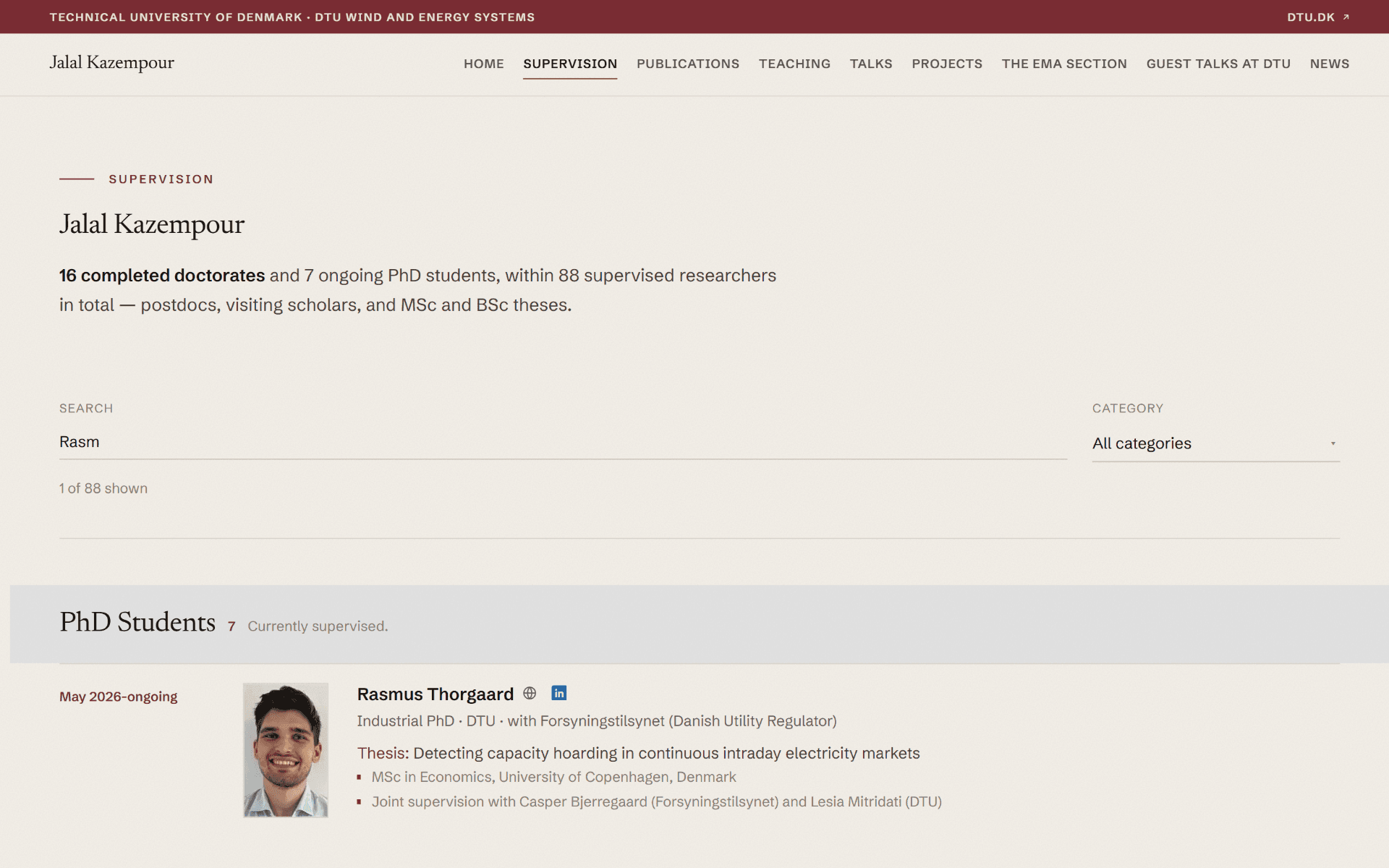
Search across 88 supervision records
Typing a name, a topic, an institution or a co-supervisor filters the list as you type. It searches everything visible on the page, including collaborators named in the small print — and if a match sits inside a section that is collapsed, that section opens by itself.
Accents do not have to be typed
Typing “Sogaard” finds “Søgaard”; “Tintore” finds “Tintoré”. Danish letters need handling that the standard approach misses, so a visitor who cannot type the character still finds the person.
Numbers are calculated, never typed
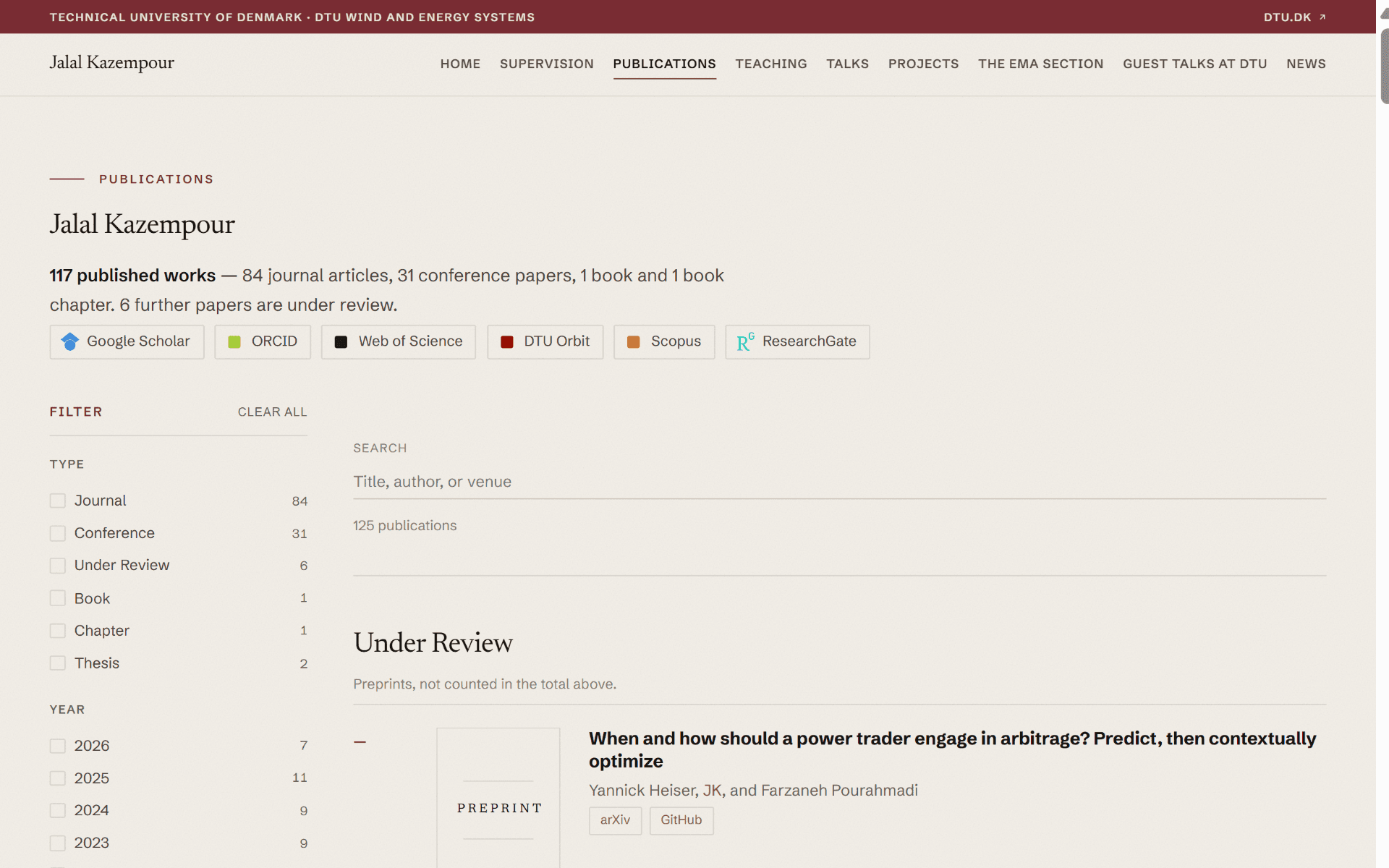
The publication count, the funding total and the summer-school edition years are all worked out from the underlying records. They cannot quietly fall out of date when a record is added, because nobody maintains them.
Every migrated dataset has its own independent checker
Publications, news, supervision, talks and projects were each carried over from the old site by a script, and each has a second script that works the answer out separately and fails loudly if the two disagree. This caught real errors — including 96 news items that had silently been filed as having no date.
The mobile layout was measured, not eyeballed
Five layouts were built and measured with the real content at real screen widths before one was chosen, rather than picking whichever looked acceptable in a desktop browser window.
Outcome
Seven pages are live, and the records that used to be kept in agreement by hand are now derived from a single source — so the counts on the page cannot drift from the records behind them. The remaining content is being migrated into the editing system, after which the professor maintains the whole site himself.
Project screenshots